Are There Stupid Questions?

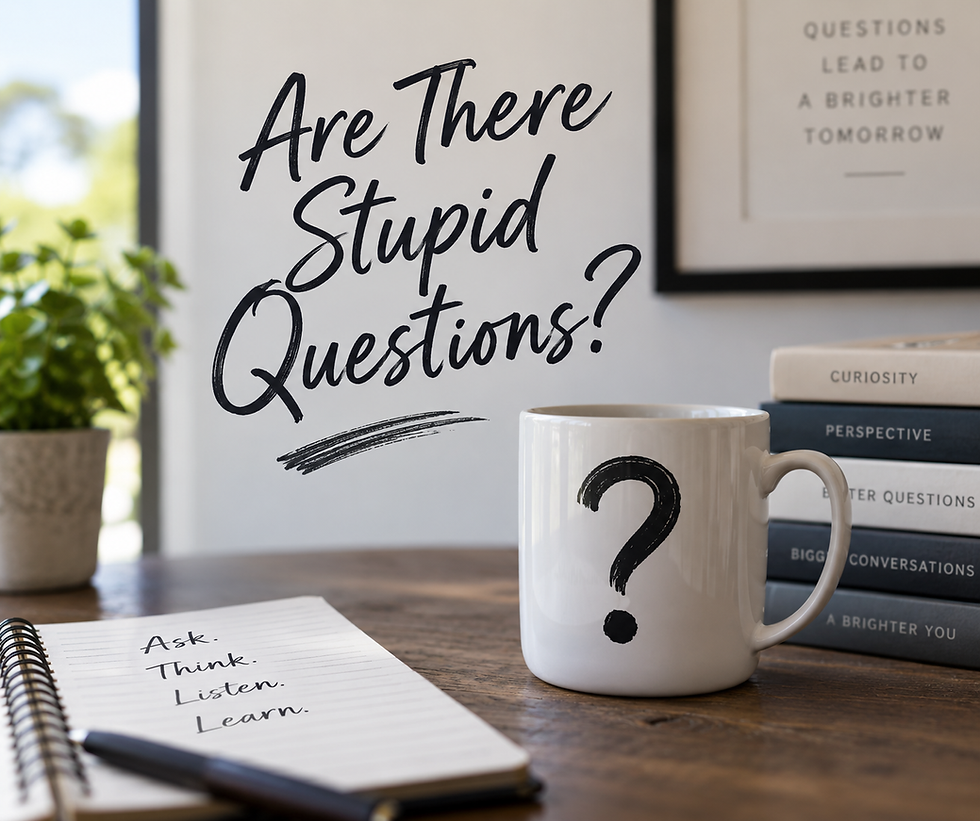
I know we've all heard the saying:
There are no stupid questions.
I disagree.
There are stupid questions.
And some of them annoy me.
Not because someone doesn't know something.
Not knowing isn't stupid.
If you don't know, ask.
If you don't understand, ask.
If you need more information, ask.
That's how we learn.
But some questions aren't asked because we don't know.
They're asked because we didn't think.
And I think there's a difference.
Sometimes the answer is sitting right there in the information we were already given.
Sometimes we ask someone else before taking thirty seconds to see whether we can figure it out ourselves.
Sometimes the question is based on an assumption we haven't bothered to examine.
Sometimes we ask the same question in five different ways because we don't like the answer we got the first four times.
And sometimes we ask a question when we aren't actually prepared to accept an answer.
That's the one that interests me.
Because what is a question if there is only one answer you're willing to receive?
If I ask what you think but become defensive when you tell me, was I actually interested in what you thought?
If I ask for advice and immediately explain why every suggestion won't work, did I want advice?
If I ask you to tell me the truth but punish you for telling it, what exactly did I ask you for?
Maybe some questions aren't really requests for information at all.
They're requests for agreement.
For reassurance.
For permission.
For confirmation.
And there's nothing inherently wrong with wanting any of those things.
But perhaps we should be honest enough to ask for what we actually want.
Because questions create an expectation that we're open to receiving information we don't already have.
And sometimes that information will challenge what we thought.
Sometimes it will require us to reconsider an assumption.
Sometimes the answer will be inconvenient.
Sometimes we'll discover that we were wrong.
Sometimes we'll simply hear something we didn't want to hear.
That's part of asking.
So yes.
I think there are stupid questions.
But I don't think a question becomes stupid because the person asking it doesn't know the answer.
I think the better distinction may be whether we were willing to think before we asked—and whether we're willing to think about the answer after we receive it.
Maybe good questions require something from us on both sides.
Enough thought to ask.
And enough openness to listen.
Because the quality of our questions may have less to do with what we know and more to do with how willing we are to learn.
Think on these things.
Welcome to the Journey.



Comments